

Empowering Communities One Family at a Time: A One Health Approach in Tsavo, Kenya
While it might not be immediately clear to everyone how elephant conservation and human well-being are linked, a community health project from Save the Elephants (STE) in Tsavo, Kenya, is turning this concept into reality with its holistic One Health approach.
In Sagalla, families rely on small plots of land where water is scarce, elephants roam freely, and the future is shaped by a changing climate. Women often carry the greatest burden – protecting their farms at night, travelling great distances to fetch water, and caring for their families all at once.
That’s why a One Health approach, which recognises and works with the deep connections between the health of humans, animals, and the environment, is a vital, practical necessity. Food and water insecurity affect humans and wildlife alike, bringing them into closer proximity and increasing conflict.
Research shows that when women are empowered to make choices about family planning and health, their households become stronger and more adaptable. With more control over their resources, they can better manage the pressures of drought, crop loss, and living alongside elephants. This empowerment helps create the conditions for coexistence – and it’s exactly what STE’s Community Health Project is working to achieve.
Established in 2021 following a pilot study supported by CHASE Africa, the STE Community Health Project has already had a positive impact on the local community.
Project leader, Belinda Omollo, is responsible for translating the One Health concept into community-centred action. With a background in community engagement and project management from her time with Kenya’s Red Cross, she brings an unwavering commitment to fostering open communication and addressing the true needs of the community.
STE has been supporting alternative livelihoods such as basket weaving and conservation agriculture to build resilience and reduce human-elephant conflict for many years. However, through ongoing work in Sagalla, it became clear that diversifying livelihoods alone wasn’t enough to address the diverse challenges facing households. Family planning emerged as the crucial missing puzzle piece supporting women to make decisions about the size of their families, enabling them to effectively allocate their time and resources, protect their land, and invest in their families.
Today, Belinda and her team support the community through two key streams: improved service delivery, in collaboration with local healthcare facilities, and information sharing in youth clubs and community barazas.
Partnering with local clinics, STE has introduced a backpack nurse scheme to bring healthcare to remote villages and promote long-term family planning options. Nurse Betty Mjomba makes regular appearances at community barazas where she promotes the available services and addresses arising concerns relating to family planning or household-level decision-making.
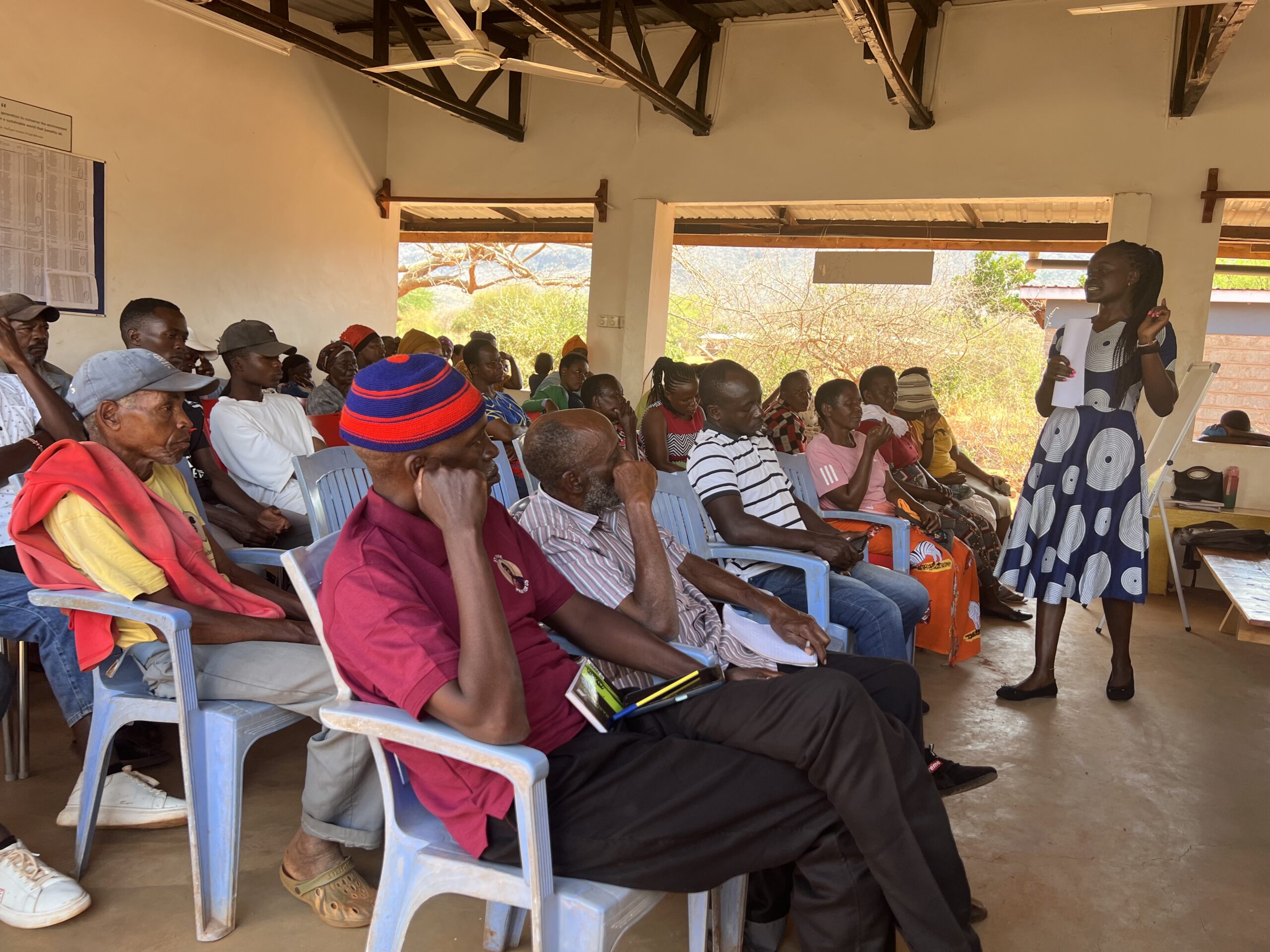
Belinda addressing the community at a One Health awareness meeting held at the Women’s Ecoenterprise Centre © Belinda Omollo
On the information sharing front, youth clubs serve as vital platforms alongside community barazas bringing young people together in schools across Sagalla and share information about topics such as mental health, sexual and reproductive health rights, and menstrual rights. These clubs provide a safe space for young people to exchange ideas and experiences, learn from one another, and build confidence and communication skills.
At the annual Rights Club Expo in Mwambiti village, I was fortunate to witness firsthand the incredible depth of knowledge spread across youth clubs, including fascinating, creative performances by the students on topics ranging from menstrual rights to gender based violence. A panel of judges, which included the community chief and representatives from Kenya Red Cross and the Gender Department, scored each performance in various categories such as poetry, narration, news broadcasting, and drama.
A beautifully delivered narrative from a student at Kirumbi comprehensive school addressed the challenges women face around menstruation, while a news broadcasting performance saw students from Mwambiti Boys school encourage the community to adopt reusable menstrual pads as an eco-friendly, accessible alternative. The joy and motivation of the audience was electric – testament to the impact of these youth clubs, and the vibrant platform they provide for young talent to shine.
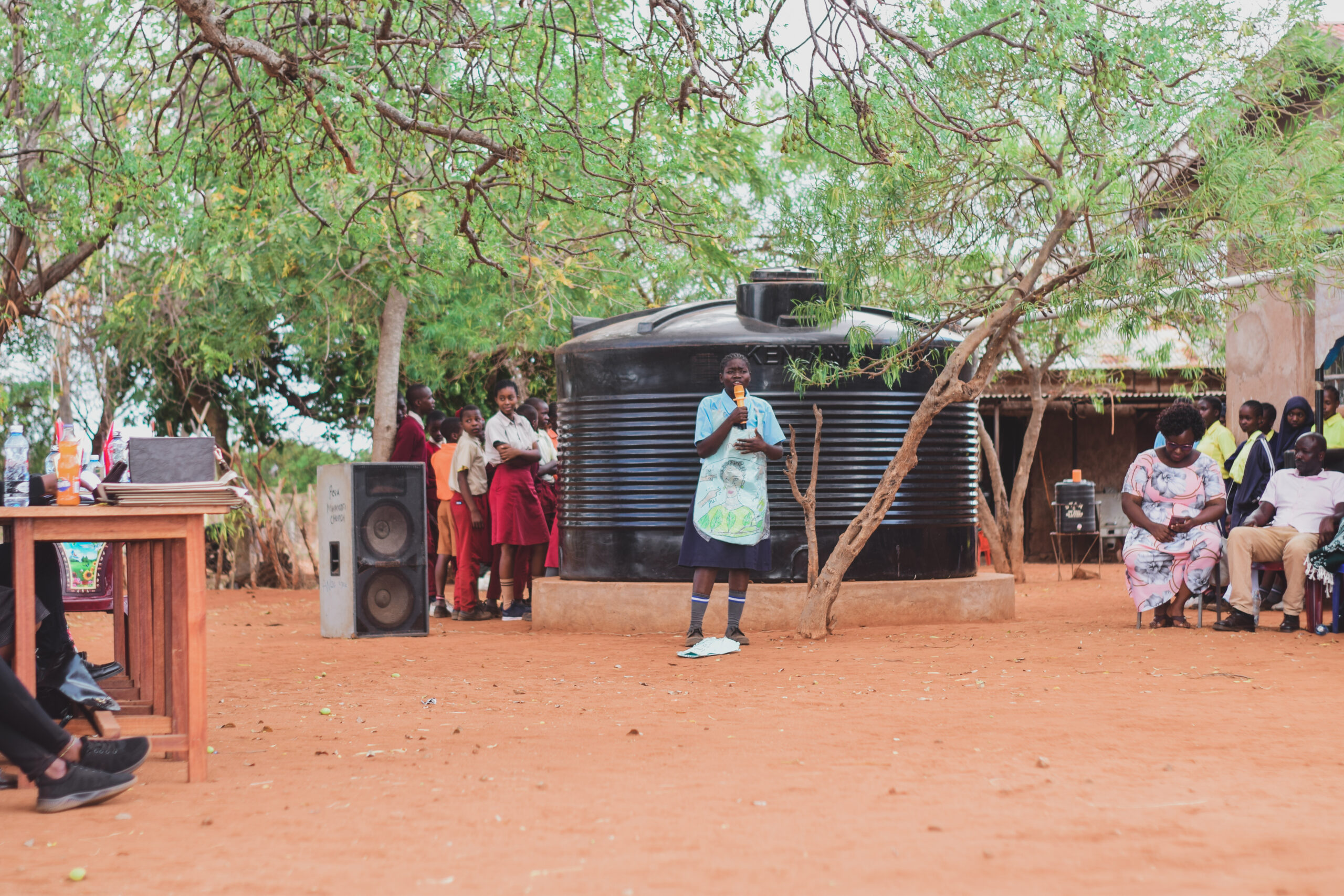
Rights club member from Kirumbi Comprehensive School performing a narrative piece about menstrual rights © Zebetech Lens Phactory
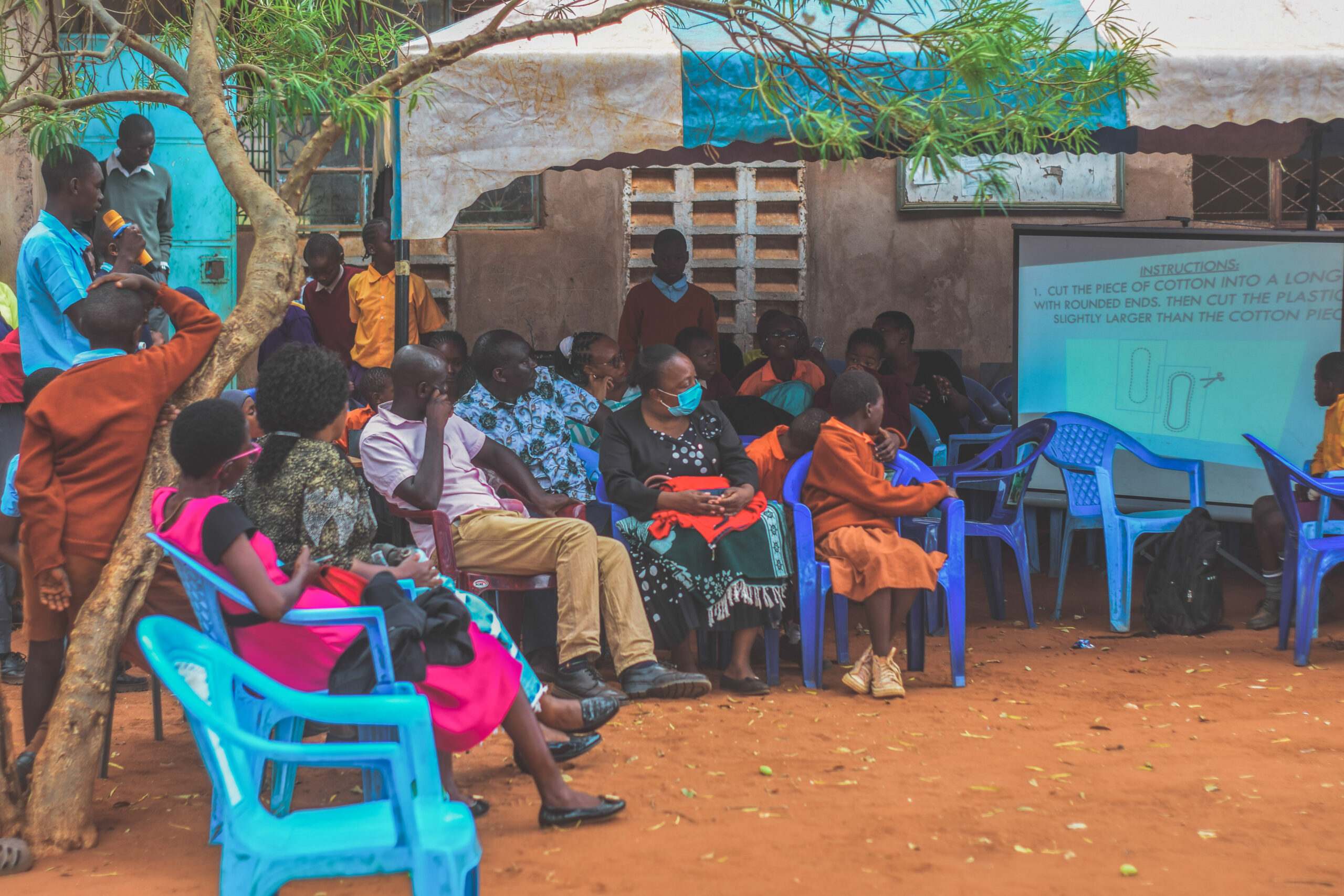
Rights club members from Mwambiti Boys School delivering a news broadcast about reusable menstrual pads © Zebetech Lens Phactory
While the Community Health Project has already achieved so much – from establishing an open dialogue around family planning, increasing the uptake of long-term methods, and empowering youth to spread awareness across schools, Belinda is already looking to the future.
“I would love to scale this project”, she says, noting that the One Health approach is currently implemented at the local level but holds immense potential to reach more people and deliver greater change.
Belinda is also very aware of a generational shift happening: the youth are not very interested in the income-generating activities of their parents but bring in their own strengths through strong digital engagement. This presents exciting opportunities for sharing information in innovative ways that could transform the relationship between people, wildlife, and the environment.
The awareness that Belinda and her team have cultivated through community engagement and youth clubs across Sagalla is unprecedented. Their unwavering determination to the project is helping this rural community keep on the path of coexistence and harmony.
On World One Health Day, we celebrate the team’s work and that of practitioners across the world, affirming that local initiatives like this hold the power to drive global change.
This work shows that when women thrive, their families thrive. And when families thrive, coexistence has a chance.
If you would like to hear more about the Community Health Project, read further here, and if you would like to support this work, please visit our donate page.